


When my fiancé, who is not typically a morning person, told me that he would not be joining me at the gym this morning, I felt something I was almost ashamed to admit: Relief. I love him, and I love the small rituals that we have built around one another. I can spend an endless amount of hours talking with him. I don’t even mind our ongoing negotiation between my enthusiasm for morning workouts and his devotion to sleep. But as I mentally prepared to leave the house without him, the morning suddenly felt clearer. It was the first time in days that no one had needed my attention, and I could finally hear myself think.
As I settled into my car, turned the music up, and watched the rain fall softly against the windshield, my mind drifted to the many things that I wanted to write and the goals I had previously set for myself. I knew many of these goals were things that I had been starting to neglect. I thought of what recently inspired me and what I needed for myself emotionally. It was not that I wanted to escape my relationship, per se, but I wanted to return to myself. I needed to return to who I was. This is when the realization occurred that solitude is often mistaken for the absence of intimacy, but solitude can be its own form of intimacy. A private meeting with the self becomes difficult to hear when every hour of your life is shared with someone else.
I sometimes grieve how long it took me to understand the beauty of being alone. I spent years wishing and hoping to meet someone with whom I would spend my time. I did not understand that once I found my person, my alone time would become something I would deliberately have to recover. I’ll admit that for the many years that I was single, I associated solitude with being unwanted. I spent my time and energy focused on finding love versus actually cultivating my creativity. I could have painted more. I could have written more. I could have investigated the ideas that interested me and discovered parts of myself that only emerge when no one else is present. I did not recognize that my unstructured time was a resource, and now I see what I missed in that period that could have allowed me to build an even more beautiful life than I have now. When you can spend time alone, you give yourself clarity and time to think about your life, who you are, your wants and needs. Your purpose. My feeling of loneliness had convinced me that my unshared time was empty, but I understand now that it was not empty. It was simply unclaimed.
Loneliness has this fascinating ability to make unclaimed time feel meaningless. It persuades us that life is happening elsewhere, usually among people who appear more loved, wanted, or accompanied than we are. As a result, we begin treating solitude as just a waiting room we have mistakenly been placed in until our true love arrives and then our real life begins. I know because I once treated it that way too.
In Writing Down the Bones, Natalie Goldberg encourages writers to use loneliness rather than simply endure it. Creativity cannot replace human connection, but it can transform isolation into an attempt at connection. A painting, essay, or song becomes a message sent from one private interior life to another.
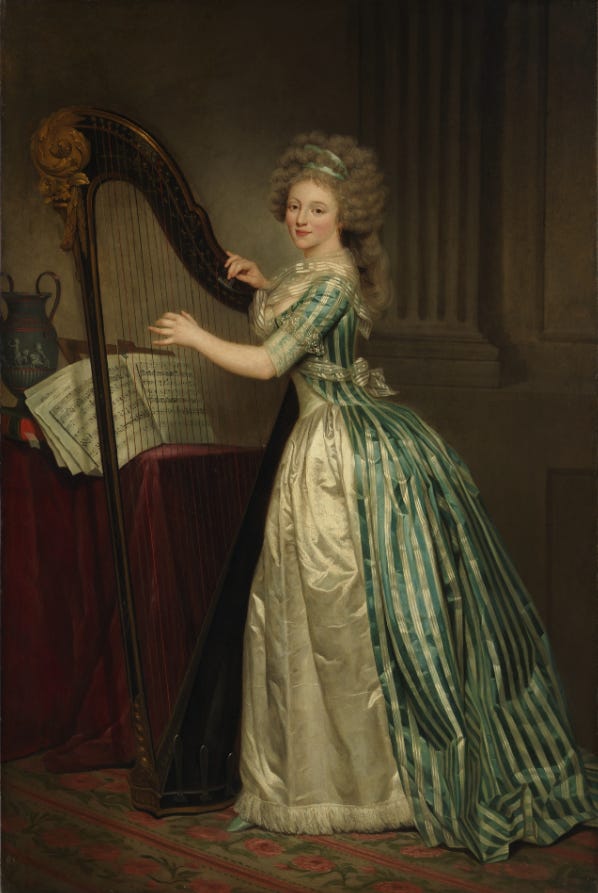
Here is another thing to consider: Loneliness does not always correspond with physical absence. We hear it expressed in songs; many of us have even experienced it ourselves: it’s the peculiar loneliness of standing in a crowded room, living within a marriage, or sitting beside someone who has stopped asking meaningful questions. When the people around us fail to truly see us, loneliness can persist despite their presence. Yet we may spend an entire morning alone and feel richly accompanied by our own thoughts. Human beings require more than the physical presence of others. Although some people may go through life insisting that they need no one, the truth is that we need affection, conversation, recognition, and the quiet comfort of being known. But there is a difference between wanting someone with whom we can share our lives and needing another person to protect us from every encounter with ourselves.
There is a particular loneliness in being known by many and understood by none.
We often talk about relationships as though the highest form of intimacy were complete union, admiring the couples who do everything in tandem and seem to keep no private life apart. In the early season, that closeness feels wonderfully romantic. Over time, though, it grows harder to say where love concludes and self-erasure begins.
The truth is that love needs enough room for two people to go on becoming. No partner, however devoted, can become the whole of our emotional landscape, our lone source of reassurance, purpose, confidence, and belonging. That burden is too heavy to lay upon another person, and too much of ourselves to relinquish in the bargain. I want my partner there because his presence lends something beautiful to a life I remain capable of inhabiting on my own.
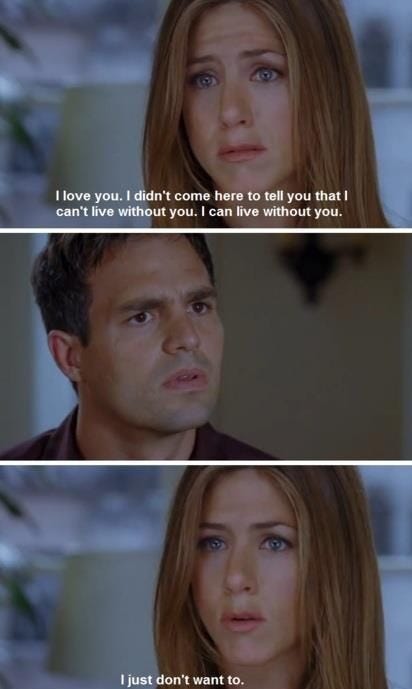
Learning to enjoy our own company also changes what we will accept from others. When solitude feels unbearable, we tolerate incompatibility, neglect, or a life that steadily narrows, all for the consolation of saying that we have someone. Once we have built a life that feels peaceful and truly our own, a relationship is asked to hold its own against it. The life we build alone becomes the measure against which all companionship is weighed.
Time apart matters for the same reason. When another person stays forever within reach, their presence settles into the furniture of our days, cherished and increasingly unnoticed. Distance interrupts that familiarity. It gives each of us room to keep developing, and it lets us return carrying thoughts and stories that do not yet belong to the relationship. The point is to let two interior lives go on developing, so that when we come back to each other, there is something fresh to exchange.
